
The long and winding road - Re-imagining the way to the board room.
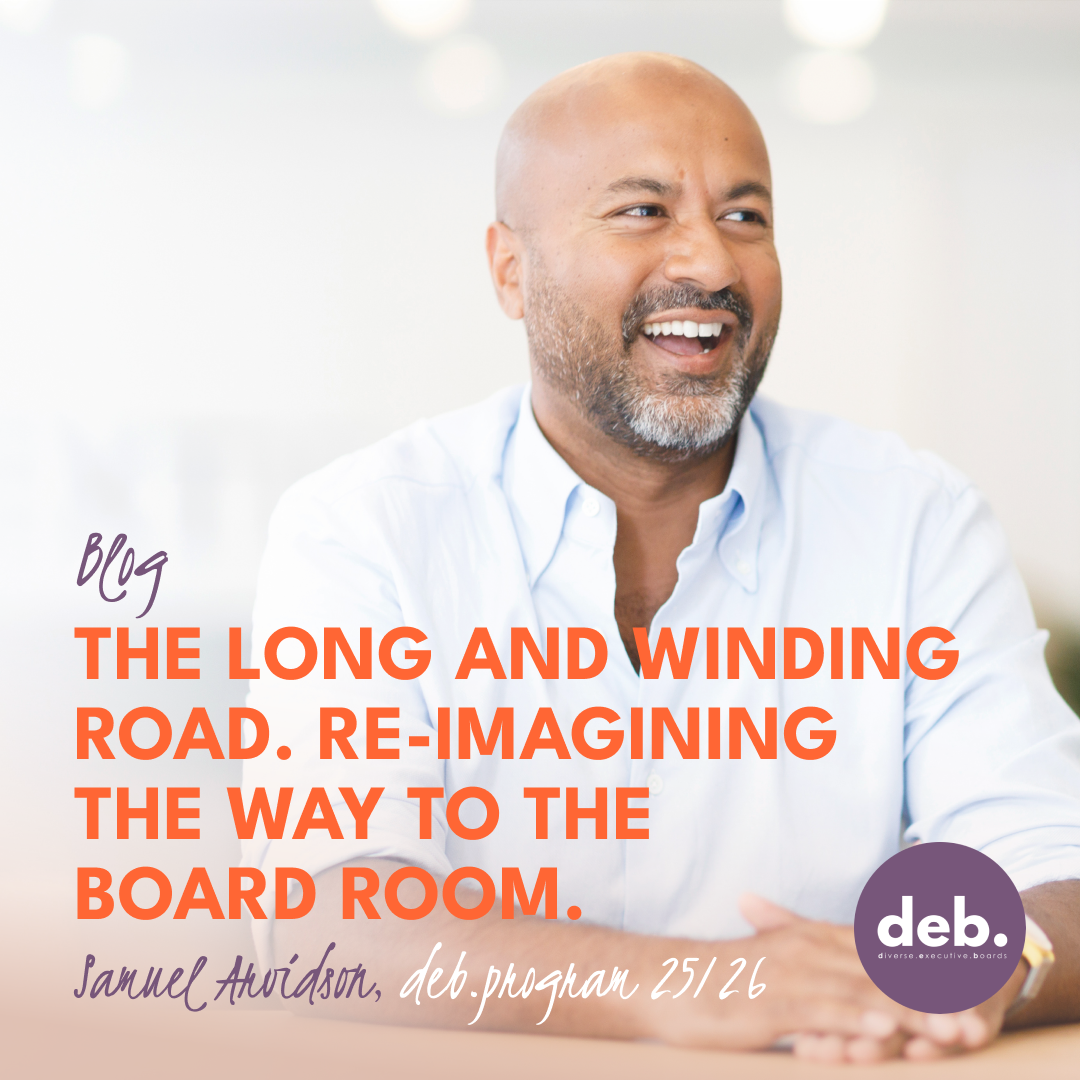
Blog written by Samuel Arvidsson | LinkedIn
By the summer of 2018 I was between a rock and a hard place professionally. My career had taken me from years in advertising and PR at leading firms into the music industry. I worked my way through senior roles at several major labels, from BMG to Sony Music London via EMI, Warner Music, and now I was in my second year at Universal Music. With a mix of luck and opportunity, I was part of the inception of Spotify, YouTube, Tiktok and beyond. Six months later, in late 2018, I had undeniable notion that this skillset wasn’t enough to keeping me employable. While my peers in the music industry insisted my skills were "future-proof," I wasn’t convinced, in fact, their conviction felt like an omen. Inevitably I came to the conclusion I needed a shift in my life.
Last year a long-time business acquaintance, let’s call her G, introduced me to C. I’m not sure if they want me to talk about them, so let’s just call them G and C. In my first meeting with C, a top-shelf board professional, over a coffee at NK, she inquired about my journey and after sharing my next career objective to do more board work, she suggested I reached out to deb.. In her view they offered a different and better approach to securing board roles. She wrote Regina and Hanna a note and soon after I met with Sara Almgren at deb. Despite being ridiculously late with my application, Hanna and Sara graciously allowed me to grab a spot in the program.
So what did i anticipate deb. could bring me, besides dealing me a better hand? Let’s step back for a moment to give you some context to my decision to join the program.
I left Universal Music in late 2020 to work for APG, a highly esteemed boutique label in Los Angeles and also took on a role at a private equity backed music label in Paris. As crypto and NFTs blew up during the pandemic, I came to the conclusion that leaving the music industry was the right move. Back in 2013, I had also joined a couple of professors, Chris Rosenqvist and Per Andersson, at the Stockholm School of Economics as a co-teacher in digital transformation and case works and I had promised myself I’d stick around for ten years. That chapter was also coming to an end in a couple of semesters and I wanted to use this momentum while still being active in that space.
Navigating this new set of circumstances, I made two decisions.
First, I accepted the role of CCO at The Gang. At the time, the team had fewer than 40 people but was already making waves on Roblox with their groundbreaking work with Vans and Gucci. Over the next three years, we grew the company to 250 employees winning major awards and having Nike, Spotify, FIFA and Amazon as clients. Second, I signed up for Micael Berglund’s executive education for board work which I hope place myself higher up in the pile at recruiters. I have nothing bad to say about the program, but it wasn't the right fit for my skillset. The alumni had different backgrounds, skillset and ambitions than mine. Naturally, finding a different path was essential, but the question was how?
Two years ago I ran into an acquaintance by chance on the street, let’s call her S. She was at the time serving on Alecta’s board. She connected me with the "Spencer Stuarts”-of the world, firms whose primary task is collecting board candidates. After speaking to them, I realised I had very little to offer them by their metrics. They wanted people who already held multiple board roles whom they could simply give more work to. They politely took my CV, had a few meetings but it went nowhere.
I want to stop for a second and be perfectly clear: I am not blaming them for their business decisions. They are ultimately rewarded on placements and not on a candidate’s individual career aspirations, or the risk that a a new hire always carry. As these firms naturally are intertwined with the nomination committees, their publicly acclaimed promise to bring in new perspectives and hires becomes almost insurmountable. It is easy to reach the conclusion that stakeholders fall short (and maybe be are), but let’s be honest with ourselves: we all hire based on familiarity and our appetite for risk. The result for this practice is a shallow pool of candidates to pick from.
Here is where deb. comes in.
Coming from grading hundreds of students and teaching in class, formal education should have the objective to supply a healthy dose of facts and teach me how to independently evaluate the information that comes in front of me. It should also give me guidance how to seek out more information and learn more. Additionally, proudly copying and insight from my SSE professor colleagues, education will never provide guarantee of a job, it is more akin to an insurance policy for the "future you" which is also something I needed in this pursuit of a new career.
I think deb. philosophy stems from a similar curricular concept. They serve you a lot of information in class to ensure you reach a critical mass of knowledge and then, if you want to be truly competitive, should be able to inquire, self-study and socialise yourself to the next level and into the boardroom. While deb. allowed me to freshen up on the legalities of board work and surfacing deep dives into future, networking, finance, the key take-away has been the anecdotal observations and learning from the teachers and hearing brilliant angles on complex problems from fellow classmates.
deb. has offered me a comprehensive, “start-to-finish” course on how to shift perspective from operational work to board work. They provide no-nonsense insight into the day-to-day responsibilities of a board and show you how to position yourself as a stronger candidate. Additionally, they line up opportunities that actually match your profile. While I haven't landed a role through deb. directly yet, I have secured one board role as we speak and have declined two others that weren't the right fit.
I highly recommend deb. for anyone who is intellectually curious and ready to embrace a new career path and wants a foundation that allows them to act on both. A special thanks to Regina Sipos, Hanna Moisander, Emelie Meurk Demerud, Linda Zimdahl, and Sara Almgren for staying on top of their game and sharing their wealth of knowledge to the rest of us.
I also want reiterate my gratitude to C, for allowing me to borrow her time despite her densely packed schedule. Her sage advice on strategic fit, compensation and frameworks has been nothing short of invaluable for me. I would not be in the program, landed my board seats and writing this, without her.
Written by Samuel Arvidsson | LinkedIn